South Maui vs. West Maui
How They Compare—and The Best of Both Worlds
Maui’s leeward coast is what Hawaiian postcards are made of: buttery-sand beaches, leggy palm trees, polished resorts, humpback whales breaching offshore—and heaps of sunshine.
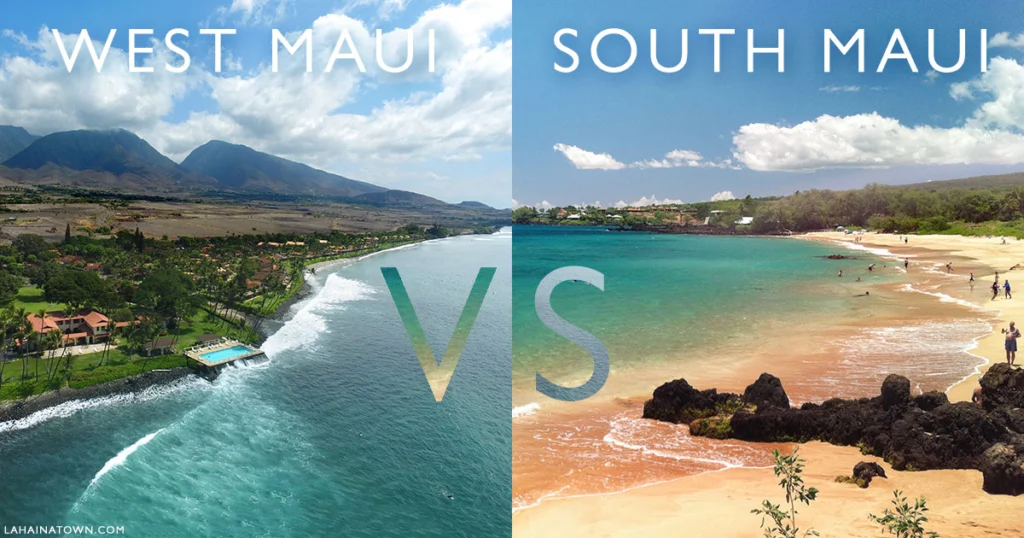
Updated for 2026: The August 2023 wildfire destroyed most of Lahaina town, including much of Front Street and many of the shops, restaurants and historic sites this comparison once featured. Lahaina is rebuilding: Front Street reopened to traffic in August 2026 and some businesses have returned. Kāʻanapali, Kahana, Nāpili, Kapalua and the rest of West Maui are open and welcoming visitors. We’ve updated each section below to reflect what you’ll find today.
And while the leeward edge has plenty in common along its stretch—from Makena in the south to Kapalua in the west—there are real differences between its southern and western ends.
Whether you’re deciding between staying in Kihei or Kāʻanapali, or simply planning a fun-packed Maui day, here’s how the two sides compare today.
Weather
Hawaii’s climate is one of its biggest draws, particularly during the winter. And while Maui’s northern and eastern shores—to say nothing of “Upcountry”—boast countless merits of their own, the island’s leeward side is famed for its predictably beautiful weather.
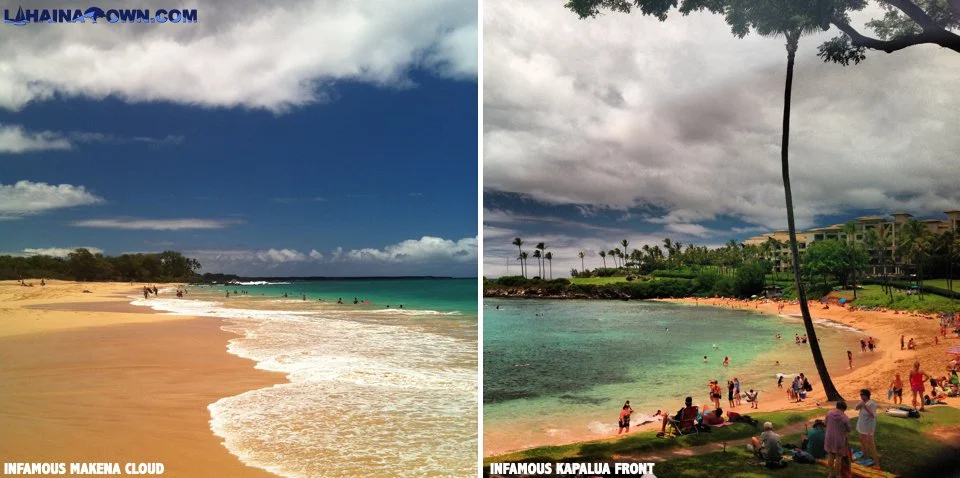
Kihei, the South Side’s largest town, and Lahaina on the West Side are both hot, dry and sunny for most of the year, especially in summer, with near-perfect weather in spring and fall. (Yes, Maui winters do exist.) Their outer areas—Wailea and Makena in the south; Kāʻanapali, Nāpili and Kapalua in the west—tend to see more clouds and the occasional cooler spell. Makena is known for its afternoon cloud, and Nāpili and Kapalua get noticeably more tropical showers than Kihei, which keeps them greener. One thing to keep in mind: Lahaina translates to “cruel sun”—and its name often lives up to itself.
In Sum: Your Best Bet
Visitors seeking heat and sunshine will be happy in Kihei or Kāʻanapali; those who want a cooler, lusher experience will love Nāpili, Kapalua and Wailea.
Accommodations
Most of the island’s resorts, condos and vacation rentals sit on the leeward side, where many of Maui’s best beaches are fronted by resorts with landscaped grounds, pools and restaurants. Kāʻanapali went down in history as Hawaii’s first master-planned resort community, and its 1960s layout still works today, with one hotel after another linked by a beachfront walkway.
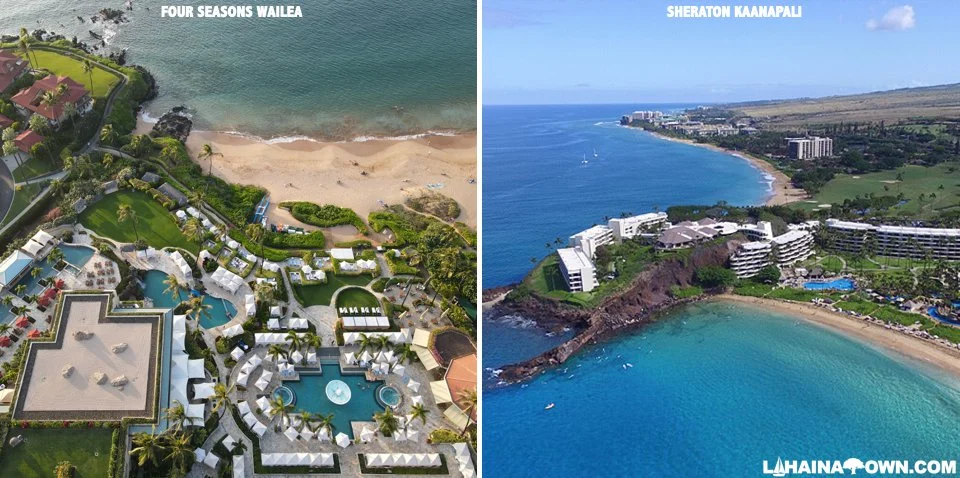
Wailea, one of the island’s poshest areas, took its cue from its western cousin, with hotels that range from the chic Andaz Maui at Wailea Resort to the elegant Four Seasons Resort Maui at Wailea, also connected by a walkable path along the ocean. Because Wailea was developed later, many of its resorts, from the Wailea Beach Marriott to Hotel Wailea, feel newer and more luxurious, and they generally cost more than Kāʻanapali’s big hotels. On the West Side, the Sheraton at Black Rock sits right on Kāʻanapali Beach, and past Kāʻanapali you’ll find two of Maui’s most opulent stays: Montage Kapalua Bay and The Ritz-Carlton Maui, Kapalua.
Outside the resort areas, you’ll find condominiums that may not offer valet parking or manmade waterfalls but are easier on the budget. Kihei leads with its long line of condos, most on or across the street from the beach, and West Maui has plenty of condos in Kahana, Honokōwai and Nāpili. Lahaina town’s small inns were in the area burned in 2023, so a West Side stay today usually means Kāʻanapali or the coast to its north. Just south of Lahaina, staying at Puamana directly supports Lahaina residents. Maui County is also phasing out many vacation rentals in apartment-zoned buildings over the next few years, so make sure any condo you book is a legal, permitted rental.
In Sum: Your Best Bet
Want a resort experience at a lower cost? Head to one of the big hotels on Kāʻanapali Beach—you won’t be disappointed. Want the most upmarket experience around? Book a room in Wailea or Kapalua. Families with keiki will often get the best value from a condo in Kihei or along the West Side’s condo coast. In Kihei, stay toward the south end: beaches north of Cove Park tend to be murkier for snorkeling and swimming. Browse hotels and accommodations on the West Side to compare options.
Another factor to consider is how close you are to the rest of Maui. If you plan to do sunrise at Haleakala, drive the Road to Hana, or take a discovery flight from Kahului, you’ll be much closer in north Kihei than in Kāʻanapali.
The Great Outdoors
Maui’s leeward side has the island’s best beaches—if by “best” you mean golden sand, swimmable water, great snorkeling, waves gentle enough for first-time surfers, and sunshine in spades. (Those drawn to rugged coastlines, big swells and dramatic weather will find their thrills on the island’s northern and eastern shores.) Both sides offer gorgeous coves, from Keawakapu Beach, where Kihei meets Wailea, to the much-loved Nāpili Bay north of Kāʻanapali.
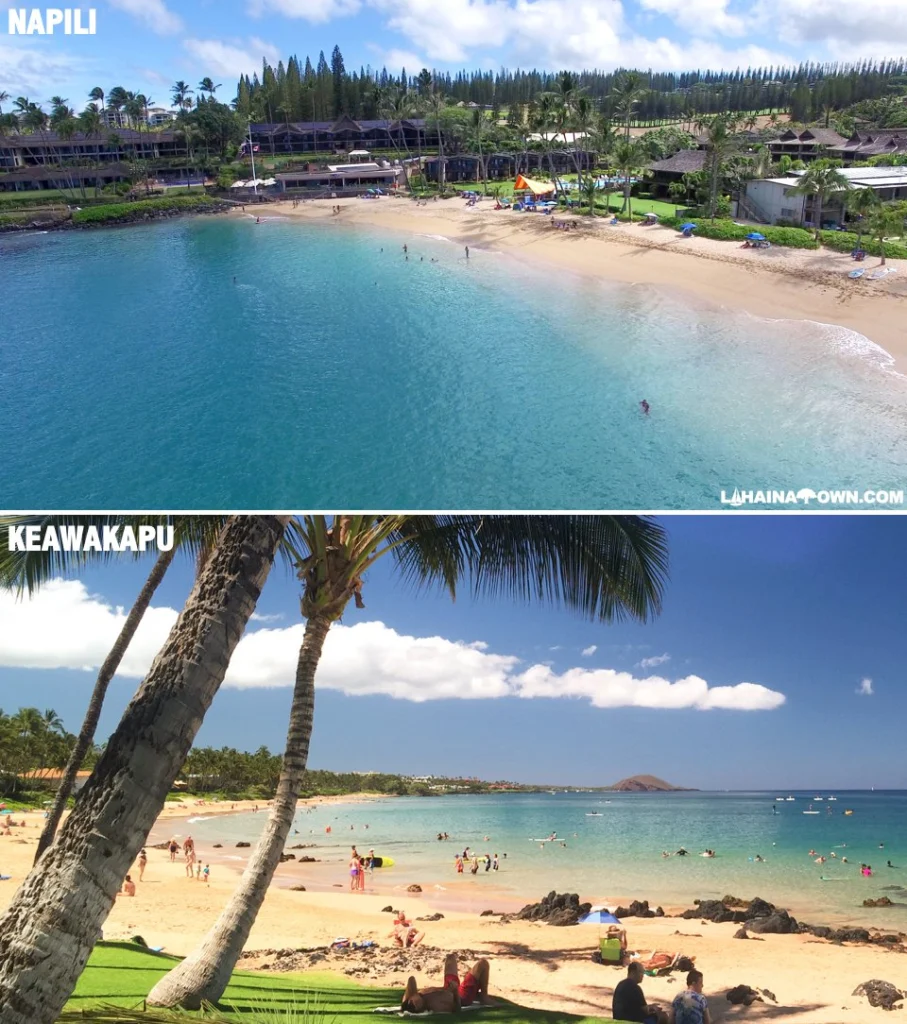
South Maui has the most sunbathing-friendly white-sand beaches, including Kamaole Beach Parks I, II and III, which sit side by side so you can beach-hop without getting back in the car. Between them and Keawakapu is the Kihei boat ramp, home base for snorkeling trips to Molokini with Redline Rafting, followed by another string of near-perfect beaches. West Maui’s beaches near Lahaina are good for beginning surfers but narrower than the southern sands, while Kāʻanapali Beach offers a long, wide stretch with snorkeling at Black Rock.
Both sides offer plenty of ocean activities, including snorkeling, surfing, stand-up paddling, outrigger canoeing and daily trips to the snorkeling mecca of Molokini. Lahaina Harbor, badly damaged in the fire, began a phased reopening in December 2025, so many West Maui boat trips now leave from Kāʻanapali Beach or Māʻalaea instead. One of our favorite outings anywhere is Kai Kanani’s sunset sail from Makena, which is great year-round.
Beyond the sand and sea, the West Side still leads for non-beach outdoor activities. Hikers can tackle the Lahaina Pali Trail or Kapalua’s Mahana Ridge, and more intrepid travelers will find the Nakalele Blowhole on the island’s northwest tip, plus parasailing off Kāʻanapali in season. Lahaina’s historic walking tour is limited while the town rebuilds (see Culture below). The South Side has the splendid Hoapili Trail, part of the ancient King’s Highway, and Keālia Pond National Wildlife Refuge, but fewer non-ocean activities overall.
In Sum: Your Best Bet
Visitors who want to spend most of their vacation on a beach towel will love the South Side’s many beaches. Those hoping for a wider variety of activities will be happy on the West Side. See West Maui activities for ideas.
Entertainment and Nightlife
Before the 2023 fire, there was no contest: Lahaina was the island’s most electrifying place after dark. The old whaling port kept its lively reputation with bars, clubs and restaurants along Front Street, from live music at Fleetwood’s on Front St. to late-night dancing at The Dirty Monkey, and an evening at Warren & Annabelle’s magic theater was a favorite for visitors. Most of those places were lost in the fire. Front Street reopened to traffic in August 2026, and a few businesses at its north end are open again, while Fleetwood’s and others are still working toward reopening.
Today, West Maui’s evenings center on Kāʻanapali. The Royal Lahaina Luau and the Maui Nui Luau at the Sheraton run on the beach, the Old Lahaina Luau has been back on Front Street since March 2024, and Warren & Annabelle’s alum David Kuraya presents his own weekly Magic & Comedy show at the Royal Lahaina Resort. Those staying on the Kāʻanapali strip can also barhop at the resorts’ bars and end the night with drinks and dessert at Duke’s Beach House.
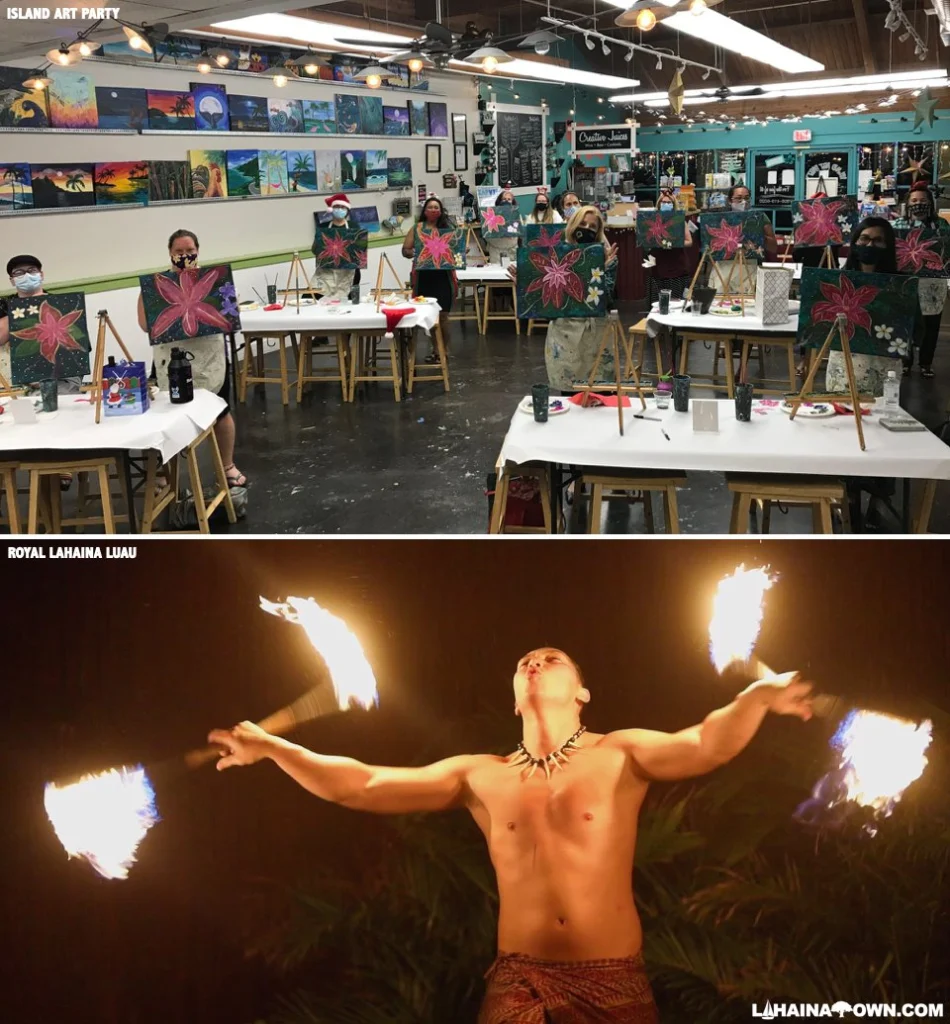
The South Side has something of a split personality. While most of the island shuts down early—there are ocean sports to enjoy in the morning—Kihei’s Triangle often stays lively late into the night, with a cluster of bars that includes karaoke, an Irish tavern, dance spots, a tiki bar loved by locals and late-night happy hour sushi. Nearby, Island Art Party is one of our favorite spots for a more creative kind of fun: enjoy drinks and snacks while you’re walked through painting your own work of art to take home.
Some of Wailea’s favorite spots, like Monkeypod Kitchen, are a bit more relaxed but no less fun. The Four Seasons and the Andaz have some of the loveliest bars on the island, with ocean views and live music from local talent, and Mulligans on the Blue has a terrific weekly lineup of entertainment.
In Sum: Your Best Bet
Young and just want to have fun? Head to Kāʻanapali, where luaus, resort bars and a weekly magic show keep West Maui evenings lively while Lahaina rebuilds, or to Kihei’s Triangle. More inclined to savor a glass of Viognier while gazing at the moonlit water from a palm-filled lobby? Enjoy all the plushness Wailea has to offer.
Dining and Shopping
To the south, The Shops at Wailea is a polished two-story plaza with local wares, luxury designers and the latest beachwear—Louis Vuitton, Lululemon, Mahina and more—plus galleries for jewelry and fine-art photography. Shopping in Kihei itself is more casual, but Kihei Kalama Village offers a cornucopia of souvenirs (plus shave ice!).
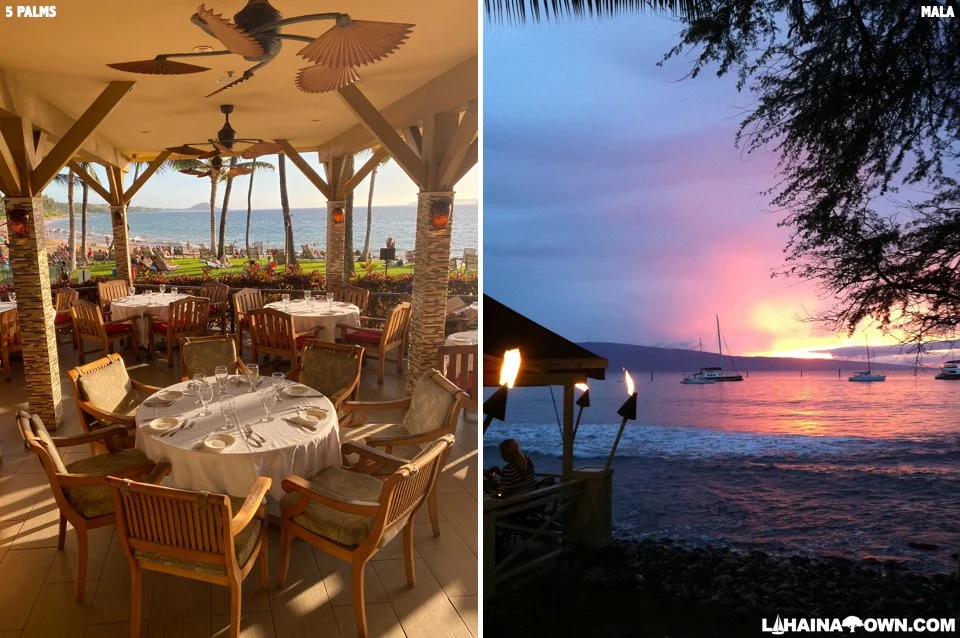
South Side dining is just as varied. Wailea is home to some of Hawaii’s best-known chefs, including Bev Gannon’s eponymous restaurant on the edge of Makena and Peter Merriman’s always-busy Monkeypod Kitchen. Kihei leans more laid-back, with Maui Brewing Co.’s brewery and restaurant on the slopes above town, sushi at 5 Palms, and plenty of local eats that are easy on the wallet.
On the West Side, Lahaina’s Front Street was once lined with about 40 art galleries, boutiques, surf shops and restaurants, from family favorites like Cheeseburger in Paradise to fine dining at Lahaina Grill. Most of those were lost in the fire. Today, a few Front Street favorites at the north end of town have reopened, including Mala Ocean Tavern, Star Noodle and Honu Oceanside, and many businesses that lost their downtown homes have moved to the Lahaina Cannery Mall and Lahaina Gateway. In Kāʻanapali, Whalers Village has everything from essentials to splurges, and the resorts have excellent restaurants of their own. See our Lahaina dining guide for what’s open now.
In Sum: Your Best Bet
Both sides have plenty to offer. On the South Side, most of the best dining and shopping is in Wailea rather than Kihei. On the West Side, Kāʻanapali and the reopened Lahaina businesses are the places to go, and eating and shopping at Lahaina’s returning businesses is one of the best ways to support the town’s recovery.
Culture
The West Side has long had the edge when it comes to history. The South Side, with the exception of Makena, which was once a farming and fishing community, was for centuries largely dry land; native Hawaiians called the Kihei coast “Kamaʻole,” or “barren.” Kihei grew mostly after the 1970s, when condominiums were built along the coast and water was piped in.
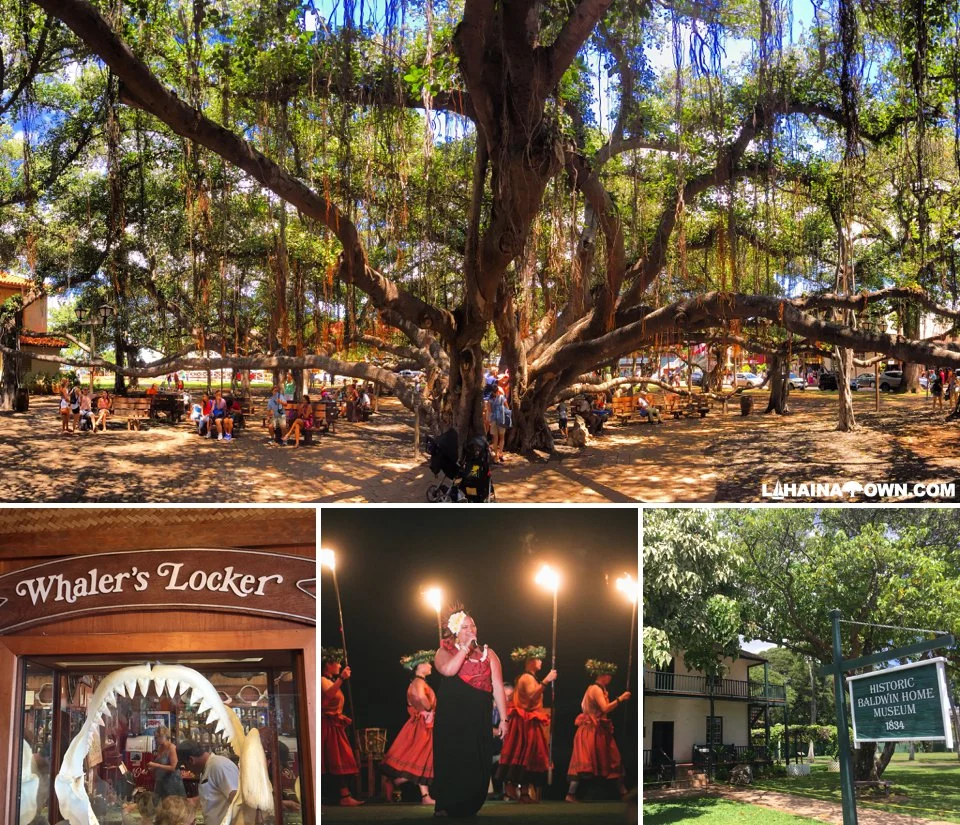
Lahaina, meanwhile, has a rich and storied past. The district, once known as “Lele,” served as the royal capital of the Kingdom of Hawaii from 1820 to 1845, and in the early 19th century its waterfront was one of the main ports for the North Pacific whaling fleet. Chinese and other immigrants arrived during the sugar era, and the town’s landmarks told that story: the Pioneer Inn, opened in 1901, the Wo Hing society hall, Waiola Church, the Baldwin Home, the Old Lahaina Courthouse and the famous banyan tree. For years the town also hosted a huge Halloween street party.
The 2023 fire destroyed or badly damaged most of those historic sites. The Pioneer Inn and Wo Hing burned, though their owners plan to rebuild; Waiola Church was lost, but its cemetery and royal graves survived; and the Baldwin Home and Old Lahaina Courthouse were gutted but kept their walls. The Lahaina Restoration Foundation has a master plan to restore eight historic sites, and the banyan tree survived and is regrowing, though its park is still fenced off. Lahaina’s culture lives on in its people, and in places like the Old Lahaina Luau, which reopened in 2024.
In Sum: Your Best Bet
History lovers will still find West Maui meaningful, but please visit Lahaina with respect: much of it is a residential community in recovery, and some historic sites can only be seen from outside their fences. To follow or support the restoration, visit the Lahaina Restoration Foundation. Prefer what’s new and fresh? You’ll love South Maui’s Wailea, also known for memorable Wailea luaus. No matter where you stay—or where you choose to spend your day—every part of Maui is worth exploring.